



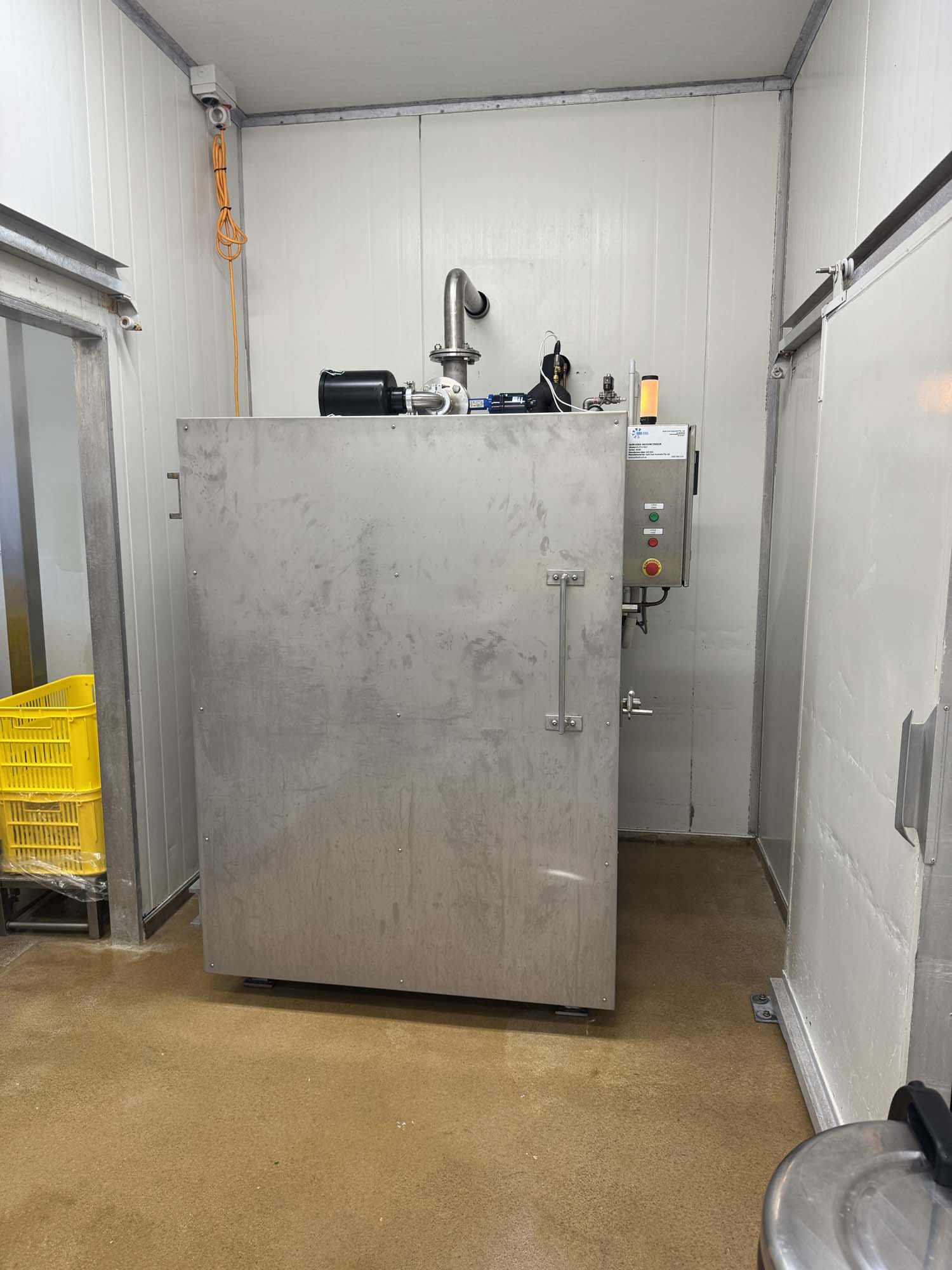
Vacuum Cooling vs Blast Cooling
| Feature | Vacuum Cooling | Blast Chilling |
| Cooling Speed | Extremely fast (minutes) | Slower (typically 30–90 minutes depending on food type and volume) |
| Mechanism | Evaporative cooling under low pressure | Forced cold air circulation |
| Best Suited For | Moist, porous foods (e.g., vegetables, rice, cooked meats) | Wide range of foods including dense or dry items |
| Energy Efficiency | Generally more energy-efficient for suitable foods | Higher energy consumption due to longer operation time |
| Uniformity of Cooling | Very uniform, especially for porous items | Can be uneven, especially in large or dense items |
| Moisture Loss | Some moisture loss due to evaporation, but can be controlled | Less moisture loss, but slower cooling may affect texture |
| Food Safety | Rapid cooling minimizes time in danger zone (5°C–60°C) | Effective but slower, requiring careful monitoring |
| Equipment Cost | Higher initial investment | Lower initial cost, more common in commercial kitchens |
| Footprint & Space | Compact units available | Larger units may require more space |
| Automation Potential | Easily integrated into automated lines | Less automation-friendly, often manual loading/unloading |
Summary:
- Vacuum Cooling is ideal for high-moisture, porous foods and offers rapid, uniform cooling with energy savings.
- Blast chilling is more versatile across food types and is widely used in commercial kitchens, though it’s slower and less energy-efficient.